



The Jennifer Ward Oppenheimer Research Grant (JWO Research Grant) was established to honour the late Mrs Jennifer Ward Oppenheimer and continue her extensive contribution to and passion for Africa, the environment, and science.

Congratulations to our 2026 JWO Research Grant Recipient, Dr Olivier Jean Leonce Manzi
Project title: Microbial genomic signals of ecosystem degradation and biodiversity loss in African multi-use freshwater systems

Congratulations to our 2026 JWO Research Grant Recipient, Dr John Paul Makumbe
Project title: Microbial genomic signals of ecosystem degradation and biodiversity loss in African multi-use freshwater systems
Congratulations to our 2026 JWO Research Grant Recipient, Dr Olivier Jean Leonce Manzi
Project title: Resistant or Quietly Declining? Quantifying Physiological Thresholds to Predict the Climate Sensitivity of African Tropical Forest (PHYTOCLIM-AFRICA)

Congratulations to our 2026 JWO Research Grant Recipient, Dr John Pal Makumbe
Project title: Microbial genomic signals of ecosystem degradation and biodiversity loss in African multi-use freshwater systems

The countdown begins!
2026 JENNIFER WARD OPPENHEIMER RESEARCH GRANT FINALISTS ANNOUNCED
Five researchers shortlisted for the 2026 Jennifer Ward Oppenheimer (JWO) Research Grant are tackling some of Africa’s most pressing environmental challenges, from climate resilience and biodiversity loss to freshwater health and ecosystem tipping points.
Established to honour the legacy of Jennifer Ward Oppenheimer, the grant is designed to empower early-career African scientists working on the front lines of the continent’s most pressing environmental challenges. The annual grant awards USD 150,000 (approximately R2.6 million) to a single successful applicant, fully supporting an innovative, Africa-led research project for a period of up to three years.
This year’s shortlist emerged from one of the most competitive rounds in the grant’s history, with 747 applications received from researchers across the continent, said Dr. Duncan MacFadyen, Head of Research and Conservation at Oppenheimer Generations.
"Being shortlisted for the grant is a remarkable achievement, particularly given this was one of our most competitive cohorts to date," said MacFadyen. "Regardless of the final outcome, we truly believe these researchers are trailblazers to watch and highly deserve the support of prospective funders."
The five shortlisted researchers
for the 2026 JWO Research Grant are:
Register here to join the webinar.

Marc Van Goethem
Developing a microbial early-warning system to predict when Africa's drylands may be approaching desertification and
ecological collapse.
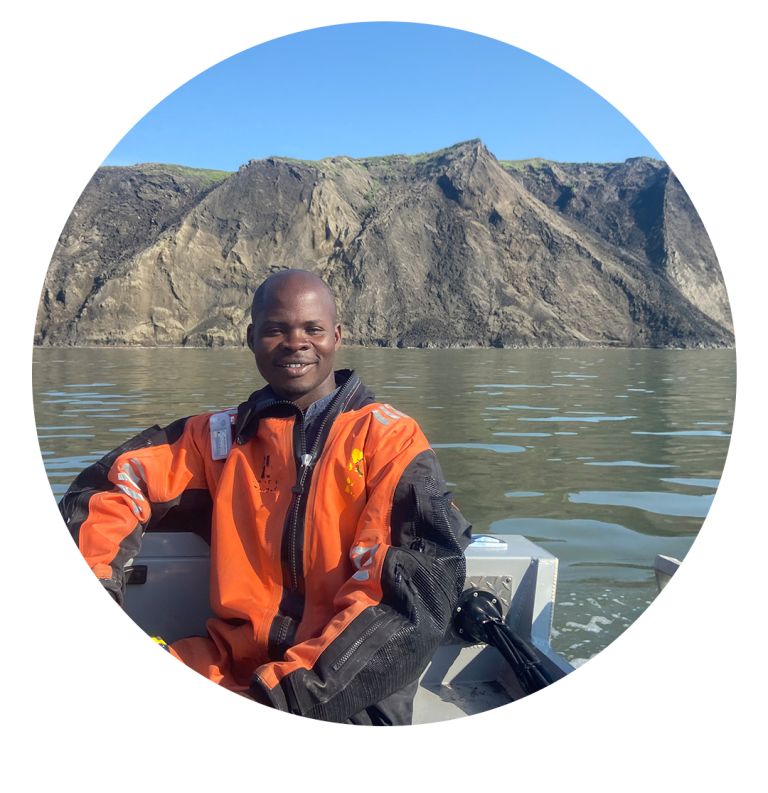
Gabriel Akoko Juma
Examining how climate-driven changes in river flows affect plankton, coastal food webs and the movement of carbon between rivers and oceans
in southern Africa.
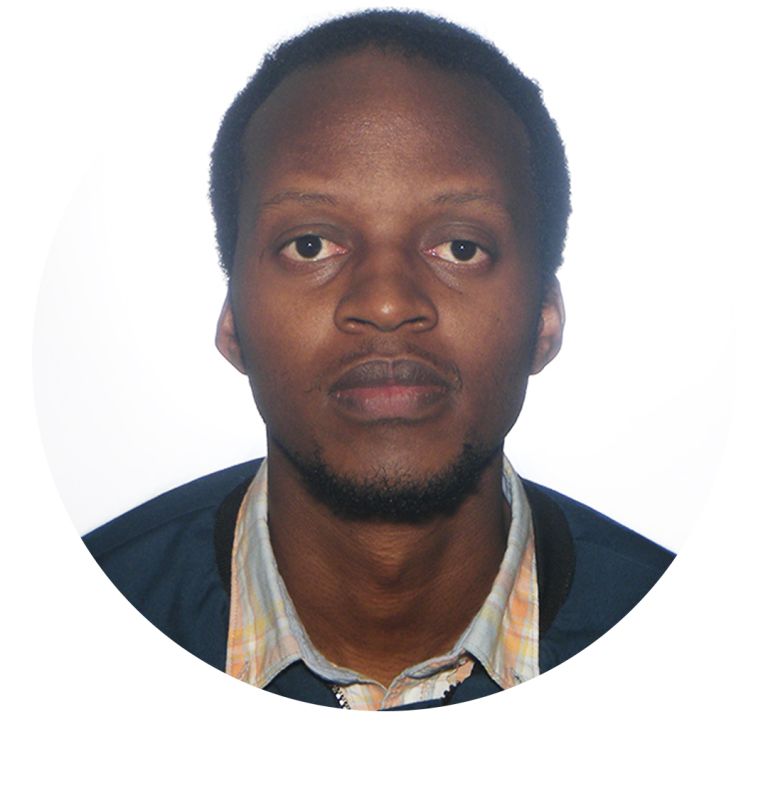
Olivier Jean
Leonce Manzi
Investigating whether Central African forests can withstand rising heat and drought, or whether hidden vulnerabilities threaten their long-term resilience.

John Paul Makumbi
Using microbial DNA to develop an early-warning system for pollution and ecosystem decline in Africa's rivers, lakes and wetlands.

Beatrice
Tchuidjang Nganso
Creating AfriPollNet, the first continent-wide platform to map African plant-pollinator networks and strengthen biodiversity, food security and livelihoods.
The 2026 JWO Research Grant recipient will be announced at the 2026 Oppenheimer Research Conference, taking place in Midrand from 7–9 October 2026.
Rendani Nenguda, Senior Research Associate at Oppenheimer Generations, said the shortlisted proposals were judged on their ability to strike a careful balance between being highly ambitious and practically achievable.
Following a further round of evaluation, the field will be narrowed to three finalists who will undergo technical interviews with the adjudication panel before a winner is selected, said Nenguda.
The panel, she said, would assess proposals against four primary criteria: scientific rigour; the feasibility of the proposed research and the applicant’s ability to deliver it; the extent of pan-African collaboration; and the project’s contribution to developing future research capacity on the continent.
While the grant is best known for its financial support, organisers say its longer-term value lies in the opportunities it can create for emerging scientists through research networks, international collaborations and increased visibility within the scientific community.
"The overarching goal is that the research facilitates solutions to African challenges, fosters collaboration across borders and helps strengthen the next generation of African researchers,” said MacFadyen.
Past recipients have used this platform to become globally recognised voices in their fields. For example, Dr Hayley Clements’ research on the Biodiversity Intactness Index for Africa revealed that much of the continent’s biodiversity persists outside formally protected areas, highlighting the conservation value of broader landscapes. Dr Bernard Coetzee’s research demonstrated for the first time that artificial light reduces the biting propensity of Anopheles gambiae and Anopheles funestes mosquitoes, the main malaria vectors in Africa. And Dr Gideon Idowu’s research identified alarmingly high concentrations of microplastics in the Osun River, up to 22,079 particles per litre of water. These concentrations exceed those reported in 267 global studies of microplastics in river water conducted since 1994.
This year’s shortlist of five research finalists shares a common ambition: to move environmental science from reaction to prediction. Whether studying microbes hidden beneath desert soils, insects moving between flowers, plankton drifting through estuaries or trees standing deep within the Congo Basin, each project seeks early warning signs of ecological change before visible collapse occurs.
Collectively, these projects demonstrate both the breadth of scientific talent emerging across Africa and how investment in early-career researchers can advance the knowledge, partnerships and innovation needed to safeguard the continent’s environmental future.
2026 Application Timeline
Successful recipient awarded
Previous Winners
2024 RECIPIENT
Dr Dr Shannon Conradie
Linking physics and biology to inform wildlife conservation under global change: an interdisciplinary approach across terrestrial and freshwater systems.
2023 RECIPIENT
Dr Lovamenjanhary Marline
Bioindicators of biodiversity, air quality and climate change – leveraging non-charismatic groups, bryophytes and lichens, in the tropical afro-malagasy region.
2022 RECIPIENT
Dr Elizabeth Le Roux
Cattle corridors – aligning ecological processes and local livelihoods.
Join the JWO Research Newsletter

|
Thank you for Signing Up |


The Jennifer Ward Oppenheimer Research Grant (JWO Research Grant) is a member of Oppenheimer Generations, a diverse community of commercial ventures and not-for-profit organisations representing the global interests of the Nicky and Jonathan Oppenheimer family.
Read more about Oppenheimer Generations